


BALTIC CONTEMPORARIES
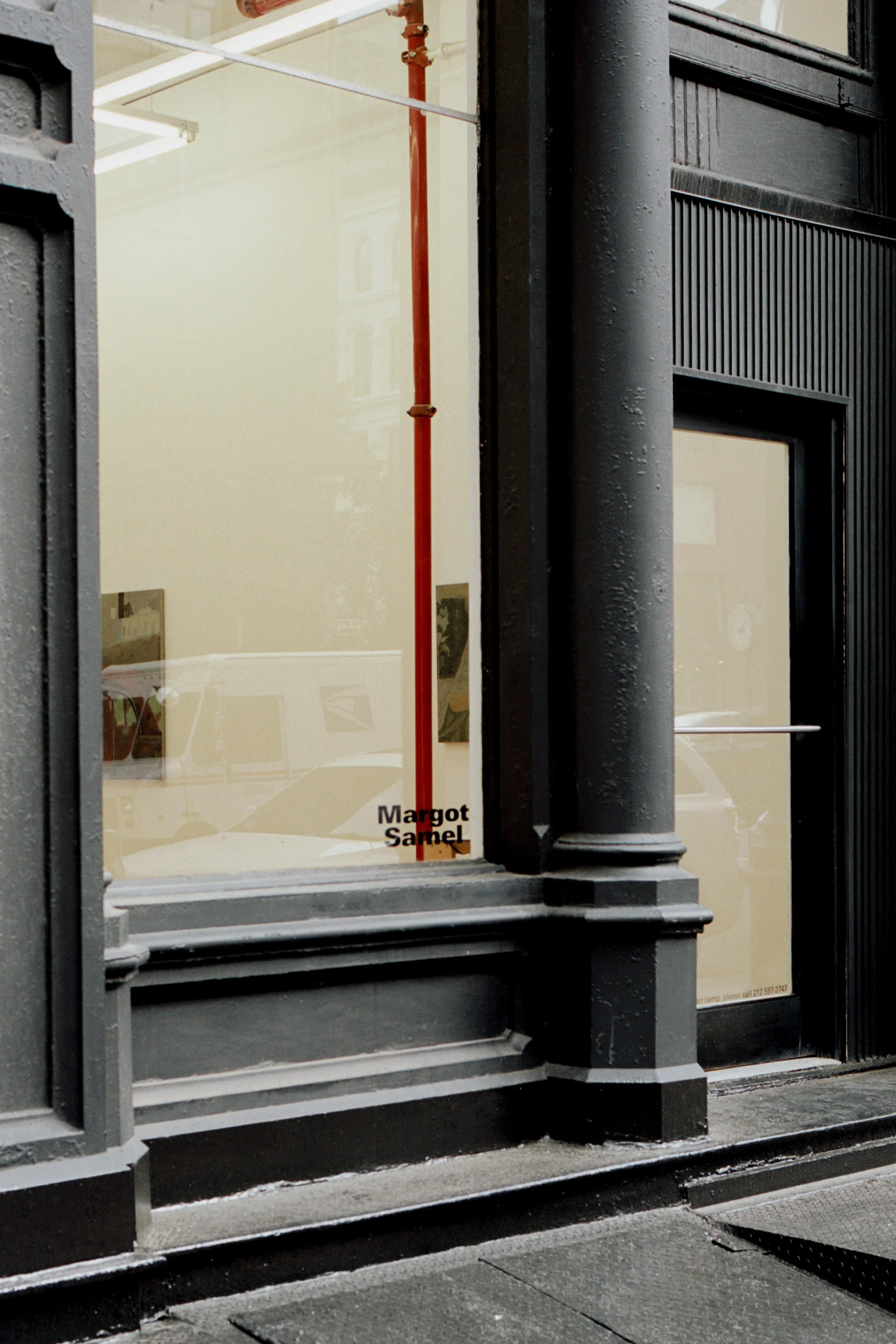
Margot samel
FOUNDING PARTNER LHV Bank
Creative Direction & Production
Silver Mikiver
Created in collaboration with LHV Bank
Veronika Veskimets, Anni Metsak
Special thanks
Jimena Velarde-Alvarez, Sasha Brodsky, Olga Temnikova
Series developed by Silver Mikiver
TRACE Original ©
What has kept you on your path?
I think it is the people I work with. The artists and visitors and those moments when you feel that an exhibition, an encounter, or a work of art has genuinely touched someone.
The other thing is stubbornness. Once you have invested so much in building something, it becomes something very difficult to walk away from, especially when you feel that you have invested your entire life in the project. I have many small, beautiful moments that accumulate into something much larger.
They mean a great deal to me.
How much can we shape our own lives?
I think chance certainly plays a greater role than I would like to admit. At the same time, you need to be ready when those chance opportunities arise.
I do a great deal of research myself. I am always asking people for recommendations, attending open studios, and reading art magazines. As Sasha’s example shows, however, an exhibition or an entire program can sometimes reach me in a completely unexpected way.
Many important things in my life have come from entirely unexpected encounters or situations, but they only work when I am already moving in a particular direction.
How can you follow your own authentic path?
An authentic path often does not feel straightforward quite the opposite.
If everything feels too safe and predictable, it may not truly be right for you.
Success comes more slowly than people think, particularly in creative fields. You have to be prepared to play the long game. It took me almost 15 years to truly understand what I wanted to do.
I have friends who opened galleries at the age of 22, immediately after university, because they knew exactly what they wanted to do. Some of them have since closed their galleries. I knew what I did not want to do, but in the end, what I thought I did not want turned out to be exactly what I did want.
Everyone needs to listen to their heart a little and simply put one foot in front of the other. You do not always need to plan five, ten, or twenty years ahead. Take it one day, one week, or a couple of months at a time—although I personally enjoy planning my gallery program far in advance.
What is your relationship with money and how do you define success?
Money used to feel more like a symbol of freedom or security. Today, I see it more as infrastructure. It is valuable when it enables me to carry out worthwhile projects and support artists and, from time to time, myself as well.
For me, success now means sustainability: being able to continue working with people I respect and ensuring that life does not consist entirely of stress and survival.
How did you become interested in art?
I have always been fascinated by people who dedicate their lives to creating something. I knew from quite an early age that I wanted to study art history. I moved to Glasgow specifically to do so. At the time, I imagined that my path would lead me to become a museum curator. After a while, however, I realized that I was drawn to galleries because of their commitment to their programs and the close collaboration they maintain with a small group of artists. The pace also seemed better suited to me.
I was drawn to the art world because of its intensity and the total immersion it demands. Founding a gallery in New York was not exactly the most rational decision of my life. It came more from an inner feeling that this was something I had to do—or at least try. At first, my ambition was more about building something and proving myself, but today I am moving toward greater depth and sustainability.
I am interested in how to develop a program that endures and holds genuine meaning for the artists, the people who visit the gallery, and those who go on to live with the works—whether in private collections or museums.
Have you noticed any common trait or characteristic among successful people?
The most important thing is to find people who believe in your work. You need to surround yourself with people who understand it and who can introduce it to others. For me, one of the most meaningful things at the gallery is when someone, especially an artist I trust approaches me to recommend an artist they think might interest me.
Artists often believe that finding a gallerist is the most important thing, but the journey is not a straight line from A to B. You first need to find your own place in the art world and commit yourself to your work before it ever leaves the studio.
What universal insight has supported your journey?
I never planned to open my own gallery. I have worked at many different galleries, so I know how complicated it is to run one and how difficult and financially draining it can be, particularly in New York. Five years ago, however, I realized that the time had come. I felt that I could no longer work for someone else.
To some extent, my gallery was an experiment to see whether it was possible to build a strong program without toxic pressure. I am still experimenting.
Could you share a difficult lesson that has shaped you?
Probably the realization that complete dedication and hard work do not automatically give you control over the outcome. Sometimes you can do everything right, as far as you can tell, and things will still become considerably more complicated than you planned.
This has taught me to approach things a little more calmly and, to some extent, to trust the process. At first, I felt that I had to prove everything to everyone. Now I understand that this does not work in the long term.